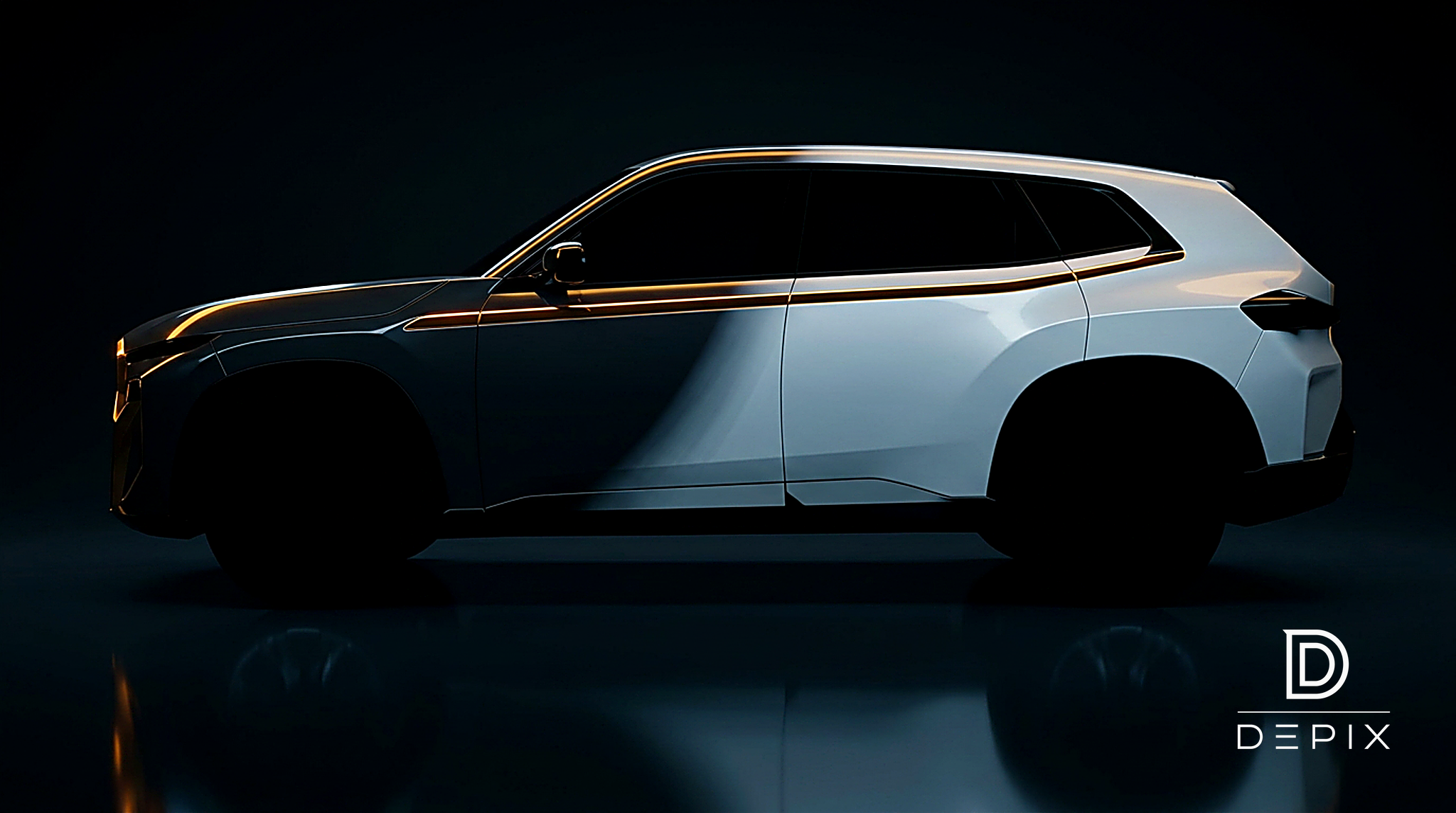
The most beautiful thing designers did to the side of the car is now banned for trapping people inside it.
For most of a century, the door handle was a problem the designer had to put up with. It stuck out. It broke the line. It cast a shadow across the most photographed surface on the whole car — the body side, the long unbroken sweep from the front wheel to the rear that a designer spends months getting right. Then the electric era handed the studio a gift: delete it. Make it disappear into the door, pop out when you approach, retract when you drive. The body side became a single clean plane, the car looked sealed and future-made, and the press releases called it aerodynamic. It was, for a few years, the single most satisfying design decision available — the handle you couldn't see.
And then people started dying because they couldn't open it.
The decision that looked like progress
The case for the flush handle was never really about range, and everyone in the room knew it. The honest aerodynamic number is small: replacing protruding handles with flush ones cuts total vehicle drag by roughly 0.3% to 1.5%, worth something like a 0.5%–1% efficiency gain and about a 10% reduction in local wind noise (Torque News). Real, but modest — a rounding error on the range figure. The actual prize was visual. A handle-less door reads as premium, sealed, resolved; it lets the designer draw the body side as one gesture instead of two. The aero was the alibi. The clean line was the product. That is exactly the kind of decision that gets approved instantly in front of a beautiful render — because in the render, the door never has to open.
The states the render never showed
A door handle has two jobs, and the studio only ever evaluates one of them. On screen it is a styling element — present or absent, flush or proud, a line to keep or break. In a crash it is a life-support system, and that is the state no hero image contains: the car upside down, the high-voltage system shut down for safety, the electrics dead, a panicked occupant or a firefighter with thirty seconds reaching for a handle that has retracted into a door it can no longer power out of.
The bodies are now on the record. In China, public alarm followed a fatal crash in Chengdu on 13 October in which witnesses said they could not open the vehicle's doors to reach the occupants — all of whom died at the scene — and a second fatal collision in Tongling, both linked to the Xiaomi SU7 Ultra (Interesting Engineering, 29 Dec 2025). An industry account of the design was damning in its specificity: "the vehicle lacked a mechanical exterior handle," and "the interior handle remained hidden and depended on electrical power. When the system failed, doors stayed locked" — rescuers could not reach the internal release even after breaking the windows. In the United States, regulators put a number to a decade of it: at least 15 deaths over roughly ten years in which motorists or rescuers could not open the doors of a Tesla that had crashed and caught fire (CBS News, 4 Feb 2026). The drag number was 1%. The cost was the door.
Two governments wrote the handle back into law
This is no longer an opinion column. It is type approval. China's Ministry of Industry and Information Technology published draft rules requiring that, from 1 January 2027, all car doors include a mechanical release that works independently of power and crash damage — on the inside and the outside, for vehicles under 3.5 tonnes — with previously approved models given until 1 January 2029 to comply (electrive, 3 Feb 2026; CBS News). It does not ban the look outright — it bans the electric-only version, the handle with no mechanical backup the studio loved most. In the US, the NHTSA opened a defect investigation on 23 December 2025 into the emergency manual door release on roughly 179,000 model-year-2022 Tesla Model 3s, after a petition alleged the mechanical release is "hidden, unlabeled, and not intuitive to locate during an emergency" (Electrek, 24 Dec 2025). A wrongful-death lawsuit over a 2024 Cybertruck that trapped its owner in a post-crash fire is already filed (Repairer Driven News, 2 Jan 2026). The redesigns now ripple far past Tesla — BMW's Neue Klasse and dozens of Chinese EVs face re-engineering for a feature they approved because it photographed beautifully (evxl.co, 28 Feb 2026).
Four teams, one handle, and a render that only spoke to one of them
The flush handle is the cleanest example yet of a decision owned by four people who never sit in the same review. Design wants the handle gone, because the body side is the brand and the seam is the enemy. Aerodynamics signs the 1% and lets design quote it as the reason. The safety engineer wants a mechanical backup the occupant can find in the dark, upside down, with the power off — and was, until 2026, the only one of the four not represented by the artefact everyone approved the car from. The buyer (never in the room) just wants the door to open every single time, including the one time it matters most. Four people, four definitions of a good handle, and the only shared tool — the render — answered exactly one of them, in the one state where the handle has nothing to do.
That is the whole argument for Design Intelligence, and the door handle makes it cleaner than any feature we've covered. The point of DEPIX is not a prettier picture of a flush handle. It is the ability to put the bold call — handle deleted, handle flush-with-backup, handle visible — in front of a design chief in the states the hero render structurally hides: the door as it must open with the power dead, the panel a firefighter actually meets, the body side weighed against the mechanical release the law now requires, while it is still a sketch and not a tooled, type-approved, recalled liability. A parallel design team in a box exists so that the most beautiful decision on the car is not also the one that gets someone trapped. The handle disappeared because, in the render, the door never had to open. Design Intelligence is what puts the open door back in the picture — before the tooling is cut, and before the regulator does it for you.
Sources
- ●Interesting Engineering — China bans retractable car door handles after deadly crash concerns (Chengdu 13 Oct crash, Tongling, Xiaomi SU7 Ultra, 1 Jan 2027) — 29 Dec 2025
- ●CBS News — China hidden door handles ban starting 2027 over safety concerns (MIIT, mechanical release, ~15 deaths) — 4 Feb 2026
- ●electrive — China bans electric door unlocking systems from 2027 (effective dates, 2029 transition) — 3 Feb 2026
- ●Electrek — NHTSA opens probe into Tesla emergency door releases following reports of deaths (179,071 MY2022 Model 3, "hidden, unlabeled") — 24 Dec 2025
- ●Repairer Driven News — NHTSA investigates Tesla emergency mechanical door handles; China bans flush EV handles (Cybertruck wrongful-death suit) — 2 Jan 2026
- ●evxl.co — China Bans Concealed Door Handles, Forcing Tesla, BMW, and Xiaomi Into Costly EV Redesigns — 28 Feb 2026
- ●Torque News — What EV Manufacturers Don't Fully Explain About Flush Door Handles (0.3%–1.5% drag, 0.5%–1% efficiency, ~10% wind-noise) — accessed Jun 2026
- ●Philip Lunn (CEO, Depix Technologies) — on the shift from inherited to decided design: the moment a property "is decided rather than inherited, it belongs to design" (LinkedIn, ~1 week ago)

The car that fakes its own voice

The clay is dead. So why is every studio still paying six figures to sculpt one?