
Concept Cars Stopped Lying: In 2026 the "Dream Car" Is a Production Spoiler, Not a Fantasy
When Audi wheeled the Concept C onto a Milan stage on 2 September 2025, the giveaway wasn't the retractable hardtop or the single vertical screen. It was the license plate. Audi's electric two-seater arrived street-legal, wearing German plates—a "concept" you could legally drive home. Audi was explicit that it is a preview of a production sports car arriving around 2027 on Porsche 718 underpinnings, and that its design language will roll across the brand. This is not the concept car your father lusted after. It is a spoiler.
For seventy years the concept car ran on a comfortable lie. Studios built one-off fantasies with impossible glass, no door handles and no crash structure, precisely because everyone understood the showroom version would be a watered-down ghost of the dream. The gap between concept and production was where ambition went to die. That bargain is now collapsing. The most-discussed 2025 concepts were overwhelmingly near-production previews, and Electrek noted the Concept C reads less like a moonshot than a dated-for-launch product. The fantasy concept isn't retired because designers got timid. It's retired because the tooling that once separated dream from product has evaporated.
The engine of that collapse is AI and virtual simulation moving upstream into the concept phase. At General Motors, designer Daniel Shapiro described a workflow where a pencil sketch is fed into AI systems that generate detailed 3D renders and animations in under a day—work that previously took "multiple teams of designers months." GM now runs an AI-powered virtual wind tunnel that predicts aerodynamic consequences of a roofline change in near real time, letting a "digital sculptor sit next to an aerodynamicist." When you can evaluate manufacturability and drag on a form the same afternoon you sketch it, the concept stops being a wish and starts being a validated commitment.
The economics are now quantified, not hand-waved. Switzerland's Neural Concept, whose AI layer sits over the CAD systems at GM, Stellantis, Renault and Subaru, claims up to a 30% shorter design cycle, up to a 75% cut in end-to-end development time, and roughly $20 million saved on a 100,000-unit program. CEO Pierre Baqué frames the goal bluntly: launching vehicles in under two years to compete with China. That is the pressure reshaping the entire industry—the concept can no longer be a two-year detour, because there is no longer a two-year cushion.
Nowhere is the compression starker than at Nissan. CEO Ivan Espinosa has committed to halving development to roughly 30 months, down from about 55, with the next-generation Skyline already built in just 26 months. His method is openly copied from China: the Dongfeng Nissan N7 was completed in two years, and Espinosa credits "AI capabilities and the utilization of new tools, more digital tools in the design phase, in the testing phase, in the manufacturing phase." He concedes China is "setting the industry standards of the future… in terms of development time." When the whole cycle shrinks to 26 months, the concept and the product are effectively the same object seen a few quarters apart.
China wrote the playbook the West is now scrambling to copy. Xiaomi—a phone company—went from an EV permit to a car, then rolled its 100,000th SU7 off the line in 230 days, a pace that took NIO and XPeng nearly three years. The SU7, developed under codename MS11 by ex-BMW designer Sawyer Li, shipped looking like its own reveal, with a claimed 0.195 drag coefficient dialed in digitally before a single physical body existed. The concept-to-production gap didn't just shrink on screen; it shrank on the factory floor.
Meanwhile the concept phase itself has become a dense, tooled discipline. As Car Design Academy's Eric Stoddard catalogued, working designers now move fluidly through sketch-to-3D tools like Vizcom, plus Midjourney and generative refinement, with prompt engineering an expected skill. The concept is no longer where a car is decorated; it is where the car is decided—proportion, package, aero and cost locked while everything is still cheap to change.
That is the whole thesis, and it is Depix's. When AI collapses concept-to-production, the concept stops being a fantasy and becomes the near-final product—which means the highest-leverage design decisions have all migrated to the earliest, cheapest moment. A wrong call at the sketch is no longer correctable in a five-year runway; it ships. Getting the concept phase right early doesn't just save time downstream—it compounds, because everything after it is now just faithful execution of a decision already made. The studios winning in 2026 aren't the ones drawing prettier dreams. They're the ones making the concept phase honest.
Sources:
- ●GM's Designers Were Supposed To Fear AI, Instead They're Using It To Do What Pencils Can't (Carscoops)
- ●How GM's AI and virtual labs are rewriting the vehicle development playbook (GM News)
- ●AI design helping automakers match China's speed-to-market (WardsAuto)
- ●Nissan Built The Next Skyline In Half The Time By Copying China (Carscoops)
- ●Nissan to cut vehicle development time in half using China playbook (Nikkei Asia)
- ●Audi Concept C: previewing a thrilling all-electric sports car (Audi Media Center)
- ●The Concept C Is So Close To Production Audi Got It Street Legal (Carscoops)
- ●Audi Concept C: a radical new style that may preview a new electric TT drop top (Electrek)
- ●EV newcomer Xiaomi rolls its 100,000th SU7 off its assembly line in a mere 230 days (Electrek)
- ●Xiaomi SU7 (Wikipedia)
- ●AI in car design 2026: Best tools, workflows and models for automotive designers (Car Design News)
- ●The Concept Cars That Defined 2025 (Motor1)

The Silhouette Is Solved. In 2026 the Car Is Won on Its Surface.
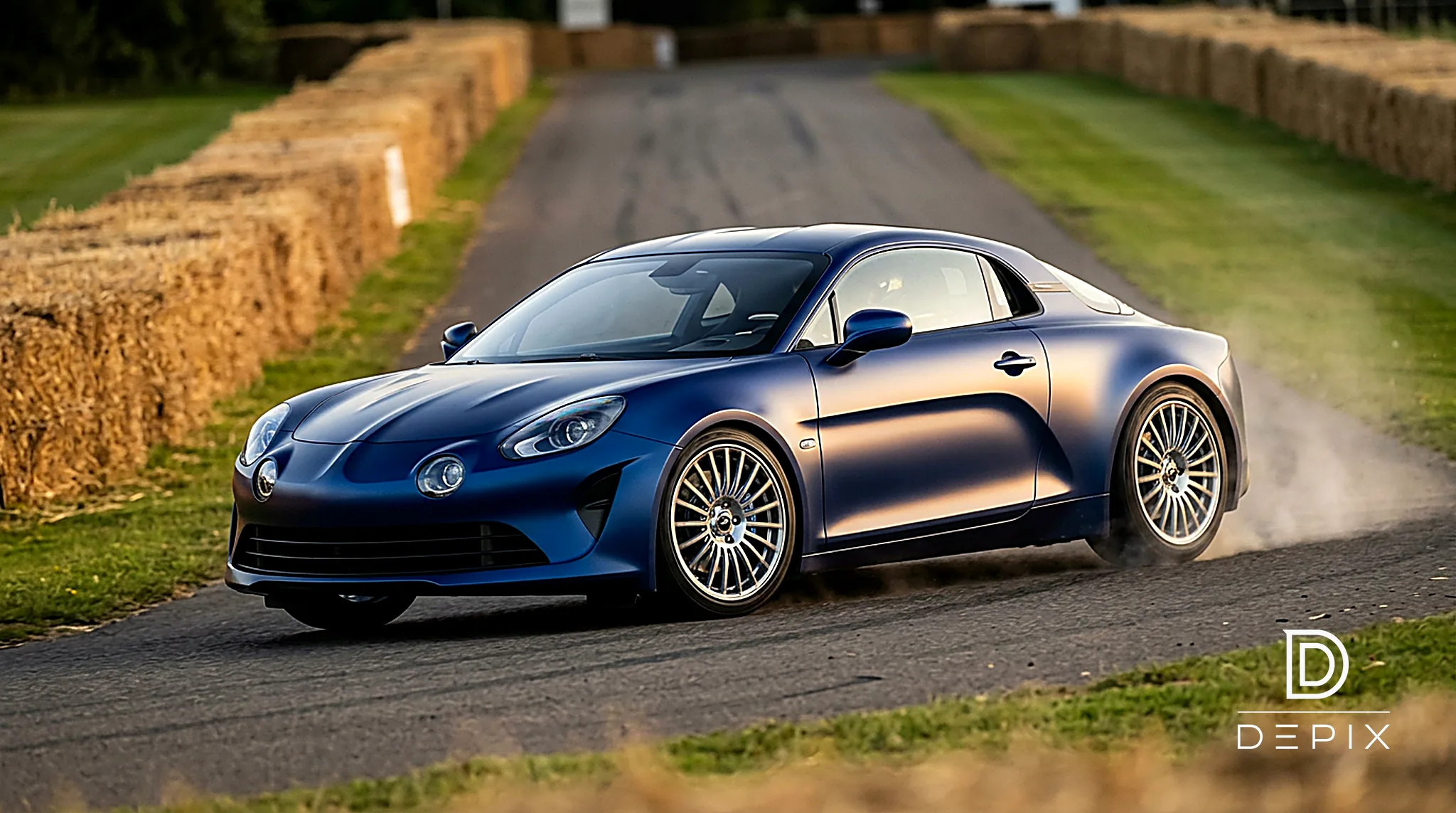
The A110's soul was never its engine.


