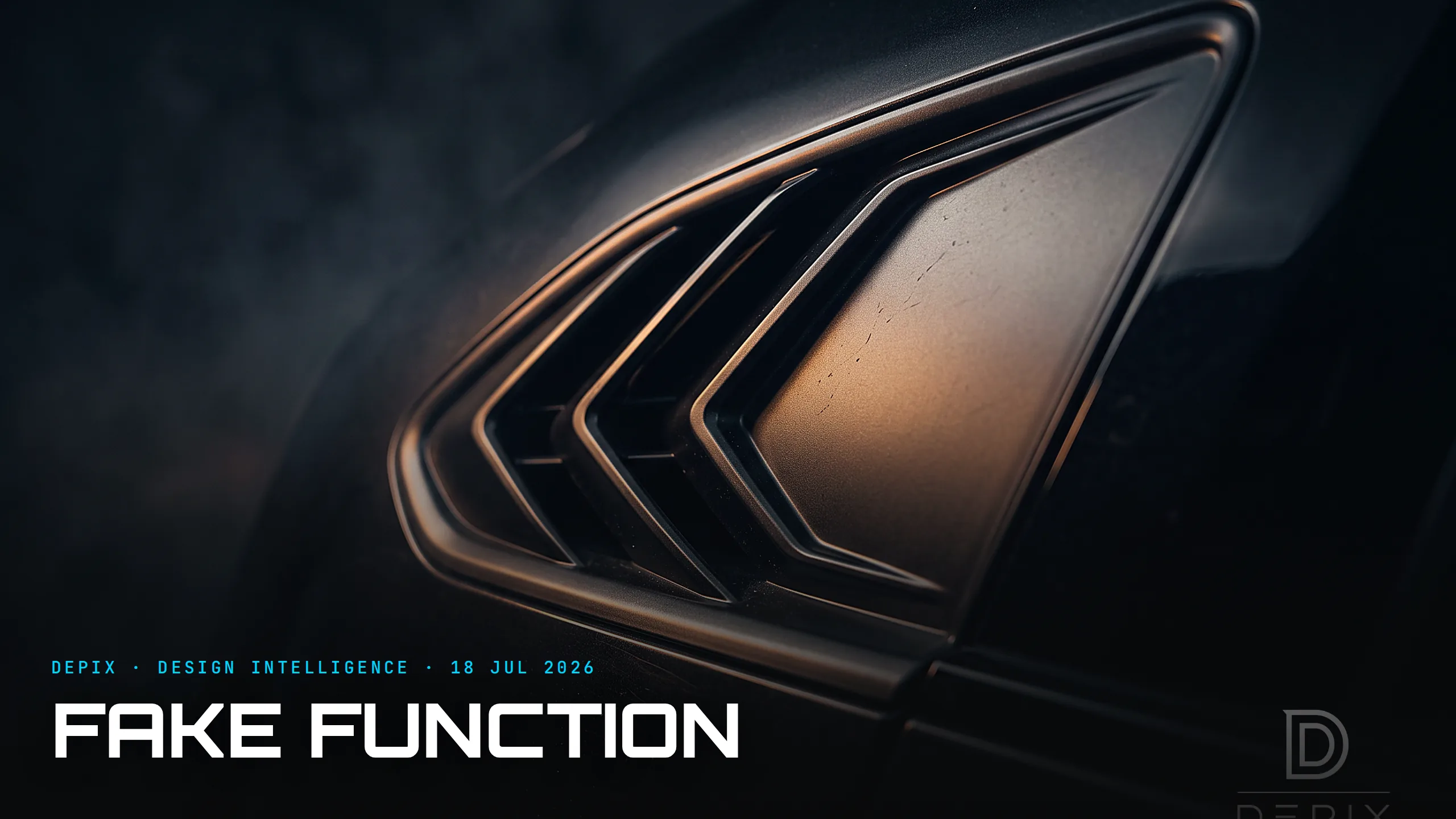
Why a Billion-Dollar Car Still Begins as a Lump of Clay
Somewhere inside every major car company, in a hangar-like studio with carefully controlled light, sits an object that looks gloriously out of place in 2026: a full-size car sculpted entirely out of clay. Billions of dollars of engineering, aerodynamics and software will eventually gather around the shape this model defines - and the industry has spent thirty years trying, and failing, to replace it with a screen.
The persistence is remarkable. Even Tesla, a company that loves to mock industry tradition, sculpts clay. BMW, Nissan, Mercedes - all of them still employ clay modelers and keep vast studios running. Given photoreal rendering, VR headsets and CFD, the obvious question is: why? Why hand-finish a tonne of modelling clay when a GPU can show you the car from any angle in seconds?
The answer is about light, and it is a deep one. A screen, no matter how photoreal, is a 2D image pretending to be 3D. It can make almost any surface look good, because the software chooses the lighting and the reflections. Real surfaces don't get that luxury. What car designers actually obsess over is the highlight - the single band of reflected light that travels along a flank as you walk past - and you cannot fake the sun. A form that looks resolved on a monitor can reveal a wobble, a flat spot, a highlight that stutters, the moment it becomes a real object under real light. Something looks right on screen and awkward in the metal, and the only way to know is to build it and look.
So designers do exactly that. They mill the clay, then push it outdoors into daylight, walk around it, view it from across a car park, run a hand down the surface to feel a transition the eye can't quite catch. Several people stand around it reading different areas at once. The clay is malleable - a modeler can add a curl of warm clay and shave it back in minutes, smoothing a proportion that no drawing could resolve.
What's fascinating is that clay didn't lose to digital; it married it. Modern studios run a loop. Designers sketch in software, and a five-axis milling machine carves the industrial plasticine - soft when warm, firm at room temperature - straight from the digital surface data, rough passes first, then progressively finer. Humans finish it by hand. Then the physical model is scanned back into the computer, the digital surface is updated, and the loop runs again. Bits and atoms, taking turns. The screen is faster; the clay is truer; the process needs both.
Here is the concept-phase lesson, and it is not really about cars. There is a category of decision that cannot be made from a representation of the thing - only from the thing itself. The overall stance of a car, the way its surface holds a reflection, whether a form has presence when you stand next to it: these are judged, committed and defended in physical clay, because that is the earliest point at which the real object exists. Get that judgment wrong and no amount of downstream engineering rescues it; the car is simply, permanently, a bit awkward. The clay model is the concept phase - the moment the form stops being a proposal and becomes a decision.
And it generalises to anything you make. A render, a mockup, a prototype, a demo: each is a representation, and each will flatter the design in ways the real object won't. The discipline is knowing which decisions you are allowed to make from the representation and which you must reserve for the real thing under real conditions - the physical build, the live environment, the actual hand of a real user. The teams that ship things with presence are the ones that, like the car studios, refuse to sign off the form until they have seen it in the light.
So the most advanced design tool in a modern car company is still a thumb, a lump of clay and a north-facing window. Not because the industry is behind, but because it learned something the rest of us keep forgetting: some things you can only decide by making them real.
Sources:
- ●In The Digital World, Why Do Car Companies Still Make Clay Models? - Carscoops
- ●How Clay Car Models Really Work And Why Designers Still Use Them - The Autopian
- ●Why Automakers Still Make Clay Car Models - Jalopnik
- ●Why The Car Industry Still Builds Life-Size Clay Models - Fast Company
- ●Here's Why BMW and Other Brands Still Use Clay Models - BMW Blog
- ●The Reason Car Manufacturers Still Use Clay Models - SlashGear
- ●Automotive Clay Modeling: Process & Class-A Guide - Dowway
- ●Sculpting the future: clay milling machine & digital transformation - Design World
- ●Watch Nissan's 5-Axis Milling Machine Carve A Clay Concept - Carscoops
- ●About Car and Transportation Design (clay milling) - TARUS
- ●Why Clay Continues to be Key in Car Design - GrabCAD
- ●Clay Milling, Clay Modeling by hand or Digital Modeling? - A. Woodward (LinkedIn)

Dazzle: What Prototype Camouflage Reveals About Where a Car's Identity Actually Lives
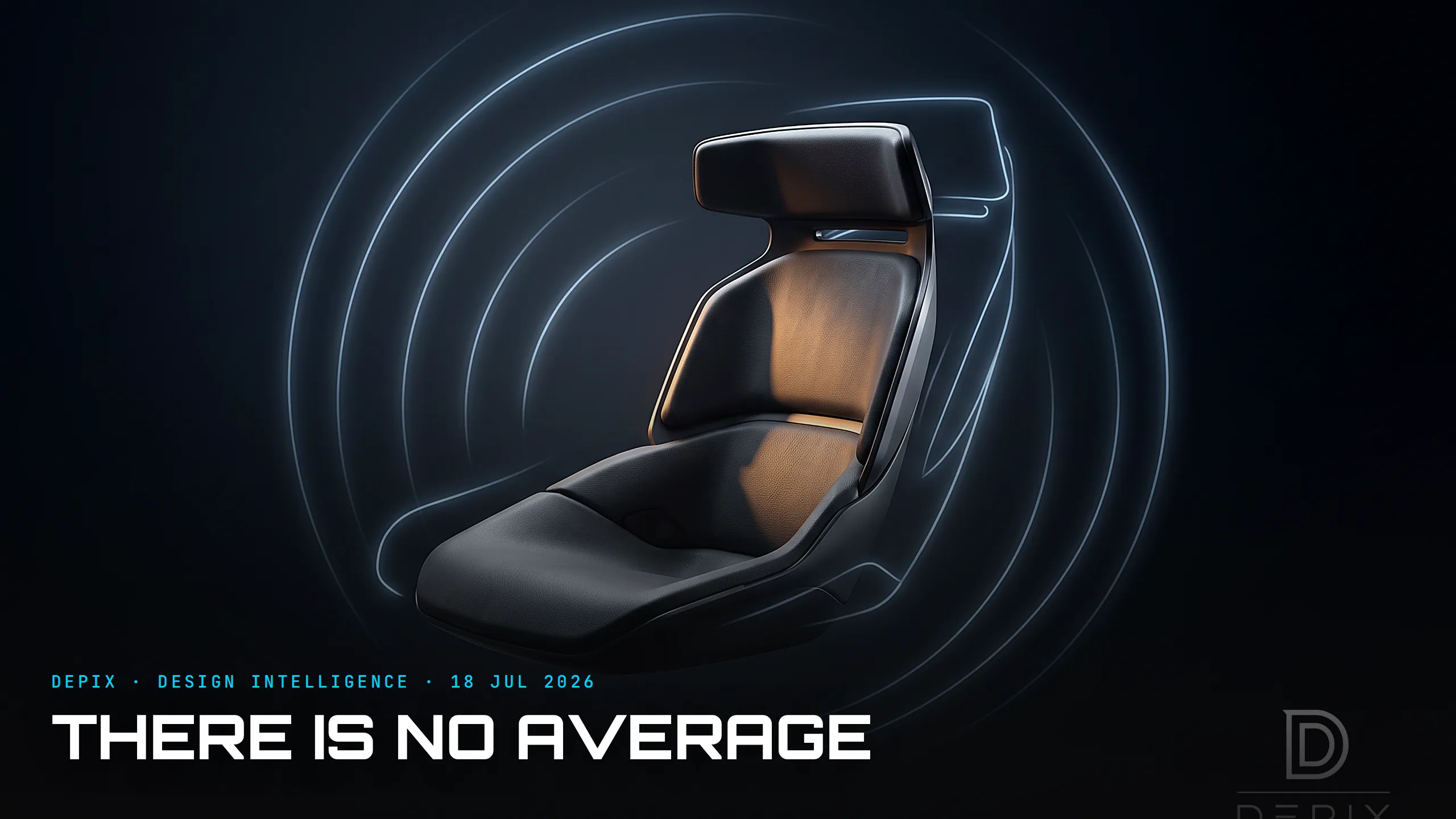
Designed for No One: What the Air Force's Vanishing 'Average Pilot' Reveals About Who You're Really Designing For