The World Cup's most personal prize is its least-designed object
date: 2026-07-06
The World Cup's most personal prize is its least-designed object
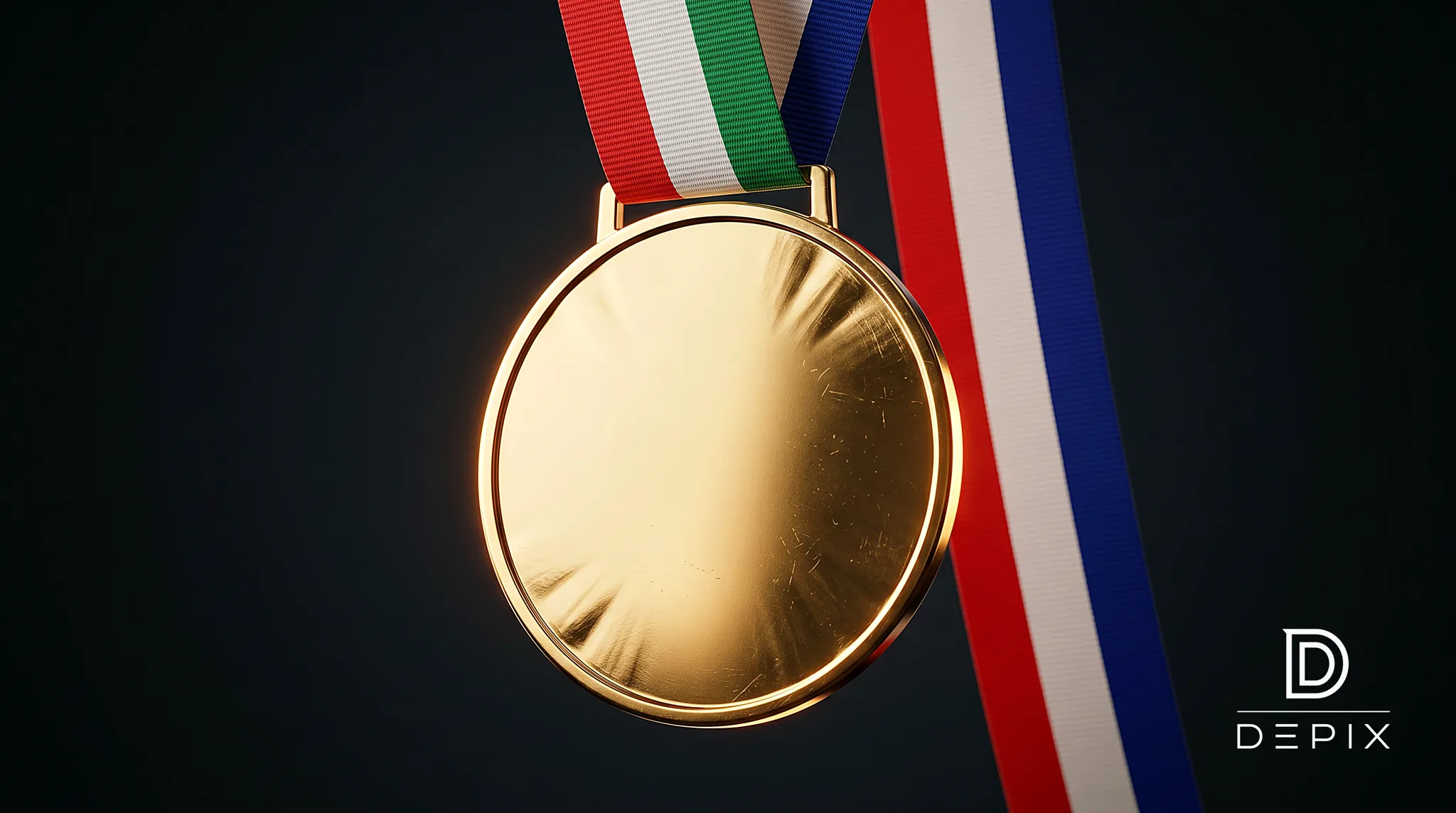
On 19 July, at MetLife Stadium, someone will lift the trophy and then hand it back. The gold, silver and bronze medals draped around the necks that night are the only objects those players keep for life. The Cup itself goes home to Zurich; the winners get a replica. The medal is the real, permanent keepsake — and it is the least designed object in the entire tournament.
Look at what FIFA lavishes bespoke design on. The Trionda match ball got a fresh geometry and an embedded sensor. Adidas resculpted the individual player awards as its own catalogue silhouettes. Louis Vuitton built the trophy a travelling trunk. Every one of these is a considered, one-off design decision. The medal, by contrast, is a template: the front carries the FIFA logo ringed by fine reliefs of a football and the world; the reverse carries the tournament emblem and the year. Swap the emblem, swap the year, and you have the next World Cup's medal. The only genuinely new decision for 2026 lives in the ribbon — which, for the first time, has to carry the colours of three host nations instead of one.
That ribbon is the whole design problem in miniature, and it is more interesting than it looks. A medal ribbon has always doubled as a passport stamp: it tells you where the moment happened. One host, one flag, one clean signal. Three hosts — the United States, Mexico and Canada — force a composite. The keepsake of place becomes a keepsake of places, and the single most emotionally loaded object a footballer owns now commemorates a region rather than a country. Whether that reads as generous or diluted is exactly the kind of call that gets made in a concept meeting years before anyone knows who will earn one.
And that is the real design-intelligence lesson buried in a medal. This object had to be finalised and struck long before qualification even finished. The designer could not know which flags would be sung, which faces would be crying, which nation's decades of hurt would end. So they did the only thing you can do when the outcome is unknowable: they designed the frame, not the picture. The medal commemorates the tournament, never the team. It is a deliberately empty vessel, and its emptiness is a feature — it will mean something different to every player who receives one, and the design has to hold all of those meanings at once without picking one.
This is a discipline every design chief recognises. The hardest briefs are the ones where the variable — the winner, the use case, the market — is locked out of your reach at the moment you have to commit. You cannot optimise for the specific outcome, so you optimise for the frame that will carry any outcome gracefully. A medal, a chassis platform, a product housing that has to survive three generations of internals it hasn't met yet: same problem. Get the frame wrong and no amount of downstream polish saves it. Get it right and it disappears into the moment it was built to hold.
The provocation for 2026 is that FIFA may have under-invested in exactly the object that outlives everything else. The trophy is theatre for ninety minutes; the medal is the thing a grandchild finds in a drawer in fifty years. If the most-kept object gets the least original design, that is a priorities decision, and priorities decisions are where brands quietly reveal what they actually believe matters. The evidence is literally hanging from a ribbon.
None of this needs a bigger budget — it needs the decision made earlier and more deliberately. The concept phase is where you choose what a keepsake stands for, and you only get one attempt before the dies are cut. This is the part of design that photoreal renders and finished prototypes can't rescue: the judgement about what the object is for, made while it is still an idea. At Depix we build for that phase — the one where the frame gets set and everything downstream inherits it. The bronze-medal match is in Miami on 18 July; the final the next night. Watch what gets handed over, and ask which of those objects the players will still have when the noise is long gone.
Sources
- ●Flashscore USA — Overview of the 2026 World Cup ball, medals and trophy
- ●TribalFootball — A complete overview of the 2026 World Cup ball, medals and trophy
- ●FIFA — The story of the FIFA World Cup trophy
- ●FIFA — New York New Jersey Stadium to host the World Cup 2026 final
- ●MetLife Stadium — FIFA World Cup 2026 Final

A flat goal net made the World Cup look amateur.

FIFA outsourced the World Cup's most-watched design to France.
