Watch Design 2026: Time Was Never the Point
The mechanical watch is, by any rational measure, obsolete. A cheap quartz movement keeps better time than a six-figure tourbillon, and the phone in your pocket keeps better time than both, corrects itself automatically, and is free. By the logic of function, the mechanical watch should have died the day the smartphone arrived. Instead it is booming: the mechanical watch market was worth around $80 billion in 2025 and is forecast to pass $114 billion by the early 2030s. Something is happening here that has nothing to do with telling time.
The numbers make the point unmistakable. Mechanical watches are only about a quarter of units sold, but they account for well over two-thirds of the entire market's value. People are not paying for accuracy — a phone wins that contest instantly. They are paying for craftsmanship they can feel, heritage, and a visible mechanical soul in a world of software that updates every year. The watch survived the death of its function because its function was never really the product.
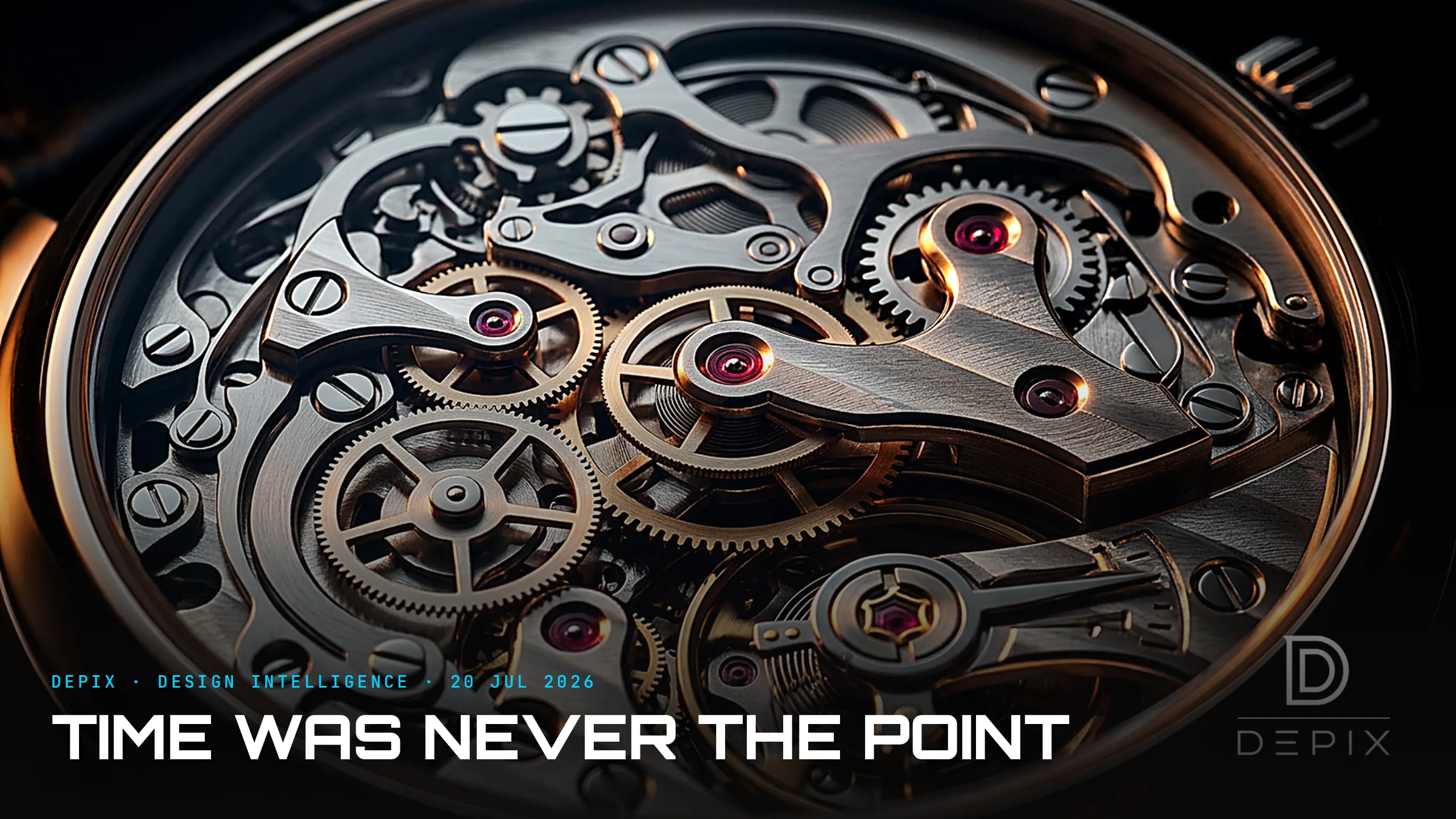
This is the most clarifying case study in design there is, because the utility has been so completely stripped away that only the meaning remains. And once you look at watch design through that lens, the 2026 trends read like a thesis statement. At Watches and Wonders 2026, the industry's biggest fair, the shift is toward smaller cases, cleaner dials, and — tellingly — open-worked, skeletonised dials that let you see the mechanism. Consumers now want to see the craftsmanship, not just wear it. When function is irrelevant, the design's whole job becomes making the effort visible.
Even the materials are pure meaning. The standout dials of 2026 are natural stone and mother-of-pearl — prized precisely because they are irregular, imperfect and never exactly the same twice. That is the opposite of what you would want from a functional instrument, where consistency is everything. A designer choosing an unrepeatable stone dial is making a concept-phase decision that the object's value lives in uniqueness and hand, not in performance. The boldest releases of the year compete on finishing, texture and character — the things a screen can never give you — not on any measurable spec.
The accuracy paradox drives it home. A certified mechanical chronometer is permitted to drift several seconds a day; a disposable quartz module is an order of magnitude more precise, and an atomic-synced phone is effectively perfect. Buyers know this and choose the less accurate object anyway, paying far more for the privilege. When a product's own customers happily accept worse performance on its founding metric, that metric was never why they were buying — a signal every designer should learn to read.
There is a design-intelligence lesson here that reaches far beyond horology. When technology fully solves a product's original function — when time becomes free and perfect — the design does not become pointless. It becomes honest. Everything that was ever really driving the purchase, once hidden behind the excuse of utility, is suddenly the only thing left. The watch stops pretending to be about time and admits it is about identity, ritual, craft and the pleasure of a mechanical thing on the wrist. The best watch designers understood this decades ago; the ones who chased the smartwatch on its own terms mostly lost, because they were competing on the one axis — function — where they could never win.
For anyone designing a product whose core function is being commoditised by software or AI, the watch is the roadmap. Don't try to out-feature the technology that just made your function free. Ask the harder concept-phase question instead: once the utility is a given, what is this object actually for? What does owning it, holding it, wearing it mean? Collectors in 2026 are answering that with their wallets, and the industry's best houses are answering it on the dial.
At Depix, this is why we push design thinking upstream, into the concept phase — because that is where you decide what an object is truly for, especially when its old reason for existing has quietly disappeared. The mechanical watch has spent fifty years proving the point. Time was never the product; it was only ever the excuse to make something beautiful enough to keep. Watches and Wonders 2026 is just the latest, most confident admission of it.
Sources:
- ●Coherent Market Insights — Mechanical watch market size & forecast
- ●Watch Masters — Why luxury watches are booming in 2026
- ●Johnson & Co — Luxury watch trends defining 2026
- ●LxryNow — Watches and Wonders 2026: the five trends
- ●King Jewelers — Watches and Wonders 2026
- ●King Jewelers — Watches & Wonders 2026 trends
- ●Robb Report — The boldest new timepieces at Watches and Wonders 2026
- ●Accio — Analog watch trends 2026
- ●Rotate Watches — Mechanical watch collecting trends 2026
- ●Forbes — Best of Watches and Wonders 2026
- ●Teddy Baldassarre — Watches and Wonders 2026 coverage

Toy Design 2026: The Best Toys Are Unfinished

EyesOn Design 2026: The Award Designers Give Each Other


