FIFA finally miked the referee, then muted the argument.
date: 2026-07-06
FIFA finally miked the referee, then muted the argument.
For the first time at a men's World Cup, the referee has a voice the whole stadium can hear. After selected video reviews across this 104-match tournament, the referee walks to the centre circle, thumbs a switch, and explains the outcome out loud — "the goal is disallowed for offside" — to everyone in the bowl. It is pitched as the most transparent officiating the tournament has ever offered. Read the wiring and it is something more precise: a transparency with a hard edge, designed in.
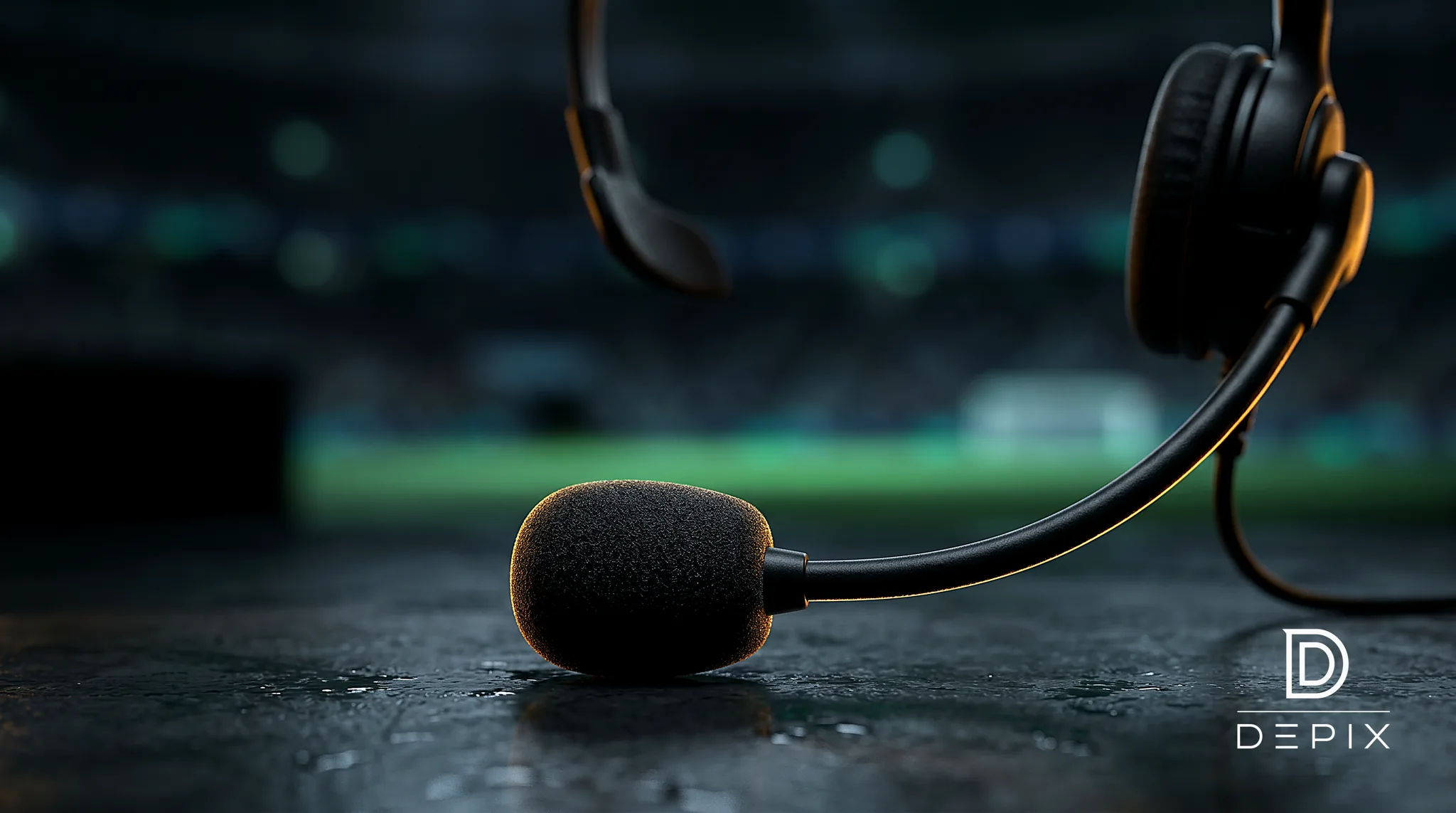
The equipment is the tell. FIFA's referee communication system runs two completely separate voice paths through the same noise-cancelling headset. One is the private intercom the officiating team talks on all match — referee, assistants, video room, a running conversation nobody outside hears. The other is a public address channel that pipes the referee's microphone straight to the stadium speakers. The two never mix. As the referee-comms specialists at Reffcom put it, the channels stay "completely separate" precisely so that "conversations inside the referee team are never accidentally broadcast to the public." And the public channel is manual: it is silent until the referee deliberately switches to it, and it carries the final decision, not the deliberation that produced it.
That is the whole design in one sentence. Fans get the verdict; the argument stays behind the curtain. The referee is now a broadcaster, but of a single edited line — the ruling — never the two minutes of doubt, replays and back-and-forth that led there. The system does not fail to share the deliberation. It is built, channel by channel, so it cannot.
It is worth being clear-eyed about why. An open review channel — the full audio of officials weighing a handball, the way rugby and gridiron sometimes let crowds hear the booth — is a genuinely different product with genuinely different risks: hesitation read as incompetence, a stray phrase clipped and weaponised, a human thinking out loud in front of a billion people. FIFA looked at that surface and scoped its public channel down to the one utterance it can fully stand behind. The feature that first appeared at the 2023 Women's World Cup and is now standard at the top of the game was never "let the crowd inside the decision." It was "let the crowd hear the decision, cleanly."
Both readings — bold transparency, or transparency safely fenced — are true at once, and that is the point. The behaviour of the whole thing was settled not on the pitch but in a concept-phase decision about what the channel is for: verdict, or process. That decision cost a sentence to make. It cost two separately routed audio paths and a tournament-wide broadcast protocol to build. And once the protocol is cast across sixteen stadiums and a hundred-plus matches, you cannot casually reopen it mid-event to let a little more of the conversation through. The scope you chose while it was still a spec is the scope you are married to on finals night.
This is the pattern under almost every interface that ships. The same referee headset could be a private tool, a public microphone, or — as FIFA has also done this tournament, strapping cameras to officials — a broadcast spectacle. Same hardware, three completely different products, and the difference is entirely a decision about what the thing is meant to communicate and, just as deliberately, what it is meant to withhold. Get that scoping right early and the interface tells exactly the story you intended. Get it wrong and no amount of polish downstream un-tells it.
At DEPIX that is the working definition of design intelligence at the concept phase: decide what an interface reveals and what it holds back while the choice is still a sketch and still free to change — because by the time it is wired into two audio paths and a broadcast contract, the argument really has been muted, whether you meant it or not.
Sources
- ●Reffcom — How the Referee's Stadium PA Announcement System Works at the 2026 FIFA World Cup (29 June 2026)
- ●ESPN — World Cup 2026 referees: Complete list of officials and VAR teams
- ●Wikipedia — 2026 FIFA World Cup officials
- ●Thairath — A look at the technology for referees at the 2026 World Cup and their new equipment


